Where Change Begins: Insights from South Asia.
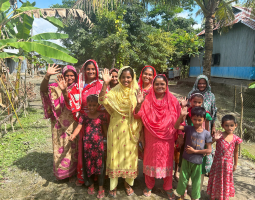
I recently had the privilege of visiting our partners in Bangladesh and India. Long car rides through chaotic traffic and rough rural roads gave me plenty of time to connect deeply with our local partners. Walking through villages and speaking with families allowed me to witness firsthand the impact of community development.
Education is at the heart of most of our projects because it is one of the most powerful tools for breaking the cycle of poverty. It equips individuals with knowledge, skills, and qualifications that open doors to better employment opportunities. This, in turn, raises income levels and strengthens economic stability for families and entire communities.
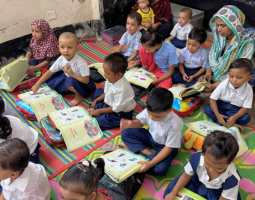
We know that early learning shapes a child’s cognitive, social, and emotional development. That’s why Entrust supports preschools in urban slums and daycare centres for women who have escaped trafficking and now work in a social enterprise in Dhaka. We also fund primary and high school education in remote areas of northern India and among marginalised communities in central India.
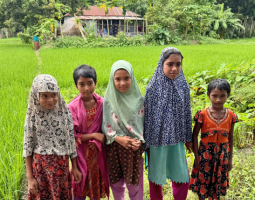
Take Pooja* for example. She comes from a “snake charmer” slum community where families live in tin huts and survive by begging or working as daily wage labourers. At 16, Pooja is in 12th grade, a remarkable achievement given the obstacles she faced. After completing 10th grade, she was expected to drop out because her community school could not offer higher classes, and she was not allowed to study outside the community. Pooja dreamed of continuing her education, and thanks to our partners, that dream is now reality. They affiliated with a registered school in the city, paid her fees, and arranged for her to keep studying at her community school. This simple intervention changed her future. Without it, Pooja would likely have been confined to household chores and early marriage. Today, she hopes for a brighter future.
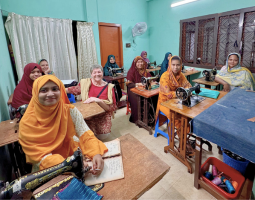
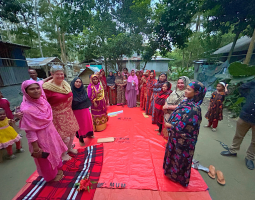
But formal education isn’t just for children. Our partners also work with women in self-help groups in both India and Bangladesh, offering adult literacy, vocational training, health and nutrition education and access to essential services.
Nandita* is one such woman. At 52, she had spent her life in deep poverty, married young, and struggled to feed her family through unpredictable daily wage labour. Her own education ended in second grade, and she was forced to marry off her daughters before they finished primary school. When Nandita joined a self-help group run by our partner, everything began to change. She learned to read and write, started saving, and received training in cattle rearing. With a small loan, she bought a cow and repaid it successfully. Later, she took a larger loan to buy a van for her husband, creating a second income stream. Today, they own three cows, have improved their family’s health and nutrition, and can afford education for their youngest daughter. Nandita is now a respected voice in her community and makes household decisions alongside her husband. Her vision for her family is brighter than ever. She aspires to buy land in the marketplace, build a house and expand her cattle business. However, her most cherished dream, born from her own denied opportunities, is to ensure her youngest daughter receives a full education.
With a grateful heart, Nandita reflects on her journey: “Through the group, I have become aware of many important things. Various training sessions have enhanced my skills. By rearing cows, our household income has increased. We have moved from extreme poverty to a more stable life.”
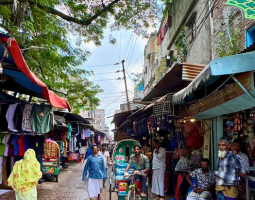
Bangladesh and India together are home to more than 20% of the world’s population. Many live in crowded cities or rural areas with non-existent services. But I don’t see crowds or rubbish or poverty. When I visit, I see people seizing opportunities, rewriting their futures, and empowering their children to strive for a better future.
Kate Munns, Entrust Project Manager.